Thursday, December 1, 2011

Contrast


This automotive Ad for the older Holden Commodore shows a poor use of contrast in its visual design. In this advertisement, the Holden company uses a backdrop that is quite bland and shares similar color to the car, providing little to no contrast. Also, the lighting is a bit unspectacular and also contributes to the lack of contrast because the lighting formations and colors are not variable in juxtaposition of the vehicle and the background. The neutral dark colors do not make the car pop out at the viewer. This car did not sell very well in Australia (this car was not available in the US). The lack of contrasting colors and textures makes the car look boring and unattractive, which also could have aided in the poor sales and overall failed design of the vehicle.


This ad for the BMW M3, however, works quite effectively. I chose this ad in particular because it has a couple of similarities with the ad that Holden utilized for their failed Commodore design. Both have backdrops that are neutral and plain, with a color that remains similar to that of the car, and both are dark photographs. However, what makes this ad work is the proper use of contrast between the car and its backdrop. In this ad, BMW contrasts the car greatly by using texture. It is obvious to the viewer that the background is a flat neutral black, whereas the lines of the car are exquisite and shiny. Their use of lighting works very well because not only does it show the lines of the car, but contrasts the darkness as well. Also, their use of contrast in wording at the mid-right side of the ad stating, "Street legal. Pretty much." in white against the contrasting black, works very well and is easy to read. The E46 BMW M3 sold very well in both US and Europe and BMW's marketing makes good use of contrast in their advertisements.

Thursday, November 17, 2011

Movement & Motion


This automotive showroom is a good representation of implied motion in a physical space. Movement of the customer is crucial to the design of the showroom. The customer also requires movement around the vehicles as they inspect them for potential purchase. The staircase implies movement as well as tiers and levels lead you to another product. There is also an escalator at the bottom right corner, which is automatically looping in motion. With this floor plan design, people are able to be surrounded by a world of products, but allows them to focus directly on any main automobile in a large space sufficient for inspection.


The Mercedes McLaren SLR is another good example of implied motion in design. First off, the wheels on the car are designed to already look like they are rotating at a high rate of speed, causing a visual "bending" of the spokes. This car was built as a supercar, rightly so with over 600 horsepower at the crank, and the overall shape of the car is characteristic of a moving arrow. The fins along the side of the car are slotted in a way that the car looks like its already moving. Another example of implied movement and motion are in the long sweeping lines of the fenders and doors in the picture because it gives the viewer a sense of speed and arrow-like movement.

Thursday, November 3, 2011

Tone and Color


A. Tone is operating in this advertisement for the Lamborghini Murcielago LP-560 because there are drastic differences amongst dark and light that are used to distinguish change and a sense of tension between static and mobile objects. The tone of the bright automobile in comparison to the dark shadowy walls and road are also used to draw attention to the sharp lines of the car.
A2. In this picture, tone works hand in hand with direction to evoke a sense of the open, unknown, adventurous world awaiting the driver. The element of direction in the poster also directs the viewers eyes towards the direction that the car is facing, in conjunction with the bright tone at the end of the road, causing the viewer to wonder what is awaiting around the corner.

B. Color is operating in this poster because the only things that are not desaturated to black and white are the car, the area around the car, and the Lamborghini logo at the top right corner. This is used for the pop-out effect discussed in class. The viewer is instinctively focused on the car and the logo. The subtle area around the car also fades from color to black and white, causing a sort of aura around the vehicle.
B2. In this advertisement, color interacts with texture in an important way. If you look at the poster, the viewer gets a sense that both the car and logo, shown in color, are sleek, sharp, and smooth. Both objects give the viewer a sense of speed, technology, and sophistication. This is used in comparison to the textures of the walls and roads in the picture. The walls and road both give off a sense of hard, cold, almost traditional feeling. This juxtaposition of objects further solidifies the tradition and evolution of Lamborghini.

Thursday, October 27, 2011

Automotive Design and Dondis Basic Elements

The Line. In this example, the designer utilizes many lines to form the overall shape and look of the automobile. The lines not only give the viewer a pictorial of how the car will look, but also gives insight to the overall directional cues of the curvature of the body. As discussed in the lecture, these lines are used for pre-visualization, allowing for the designer to leave space for further refinement and new ideas. This picture is a rough sketch in which the designer leaves space for details later on, such as the fins on the sides and design of the wheels. Although the lines give detail as to the look of the automobile, it is able to communicate a thorough idea without too much detail.

The Triangle (Direction). In this picture, we see a designer for Lamborghini and a clay model design of the 2011 Lamborghini Aventador. We can clearly see the multiple usage of triangles in the design of the automobile in the wheels, fins along the top of the rear hatch, grills and diffusers along the sides of the car, as well as the overall cars shape. In class, we discussed how the triangle represents a menacing feeling, threatening and provoking (similar to a bull, the logo of Lamborghini's automobiles). The Lamborghini Aventador was designed with these characteristics in mind and achieved its styling cues from that of a fighter jet. Even the instrumentation on the panel cluster is representative of an airplane and includes many triangles. The triangle is able to induce these feelings because it is dynamic and unstable in shape. Unlike a square, which is solid and static, the triangle looks like it is in motion and is representative of stress and tension.

Texture. In this picture of the interior of a Pagani Zonda R, we are able to see the many different textures used throughout the car's overall interior design. The interior on this supercar consists of many different materials, including leather, suede alcantara, carbon fiber, aluminum, and glass. The seats have leather bolsters with suede alcantara inserts, the steering wheel is covered in suede, along with an aluminum center piece and a speedometer encased in glass. The pedals and most of the dash board are aluminum, and the chassis is composed of dry carbon fiber composite. All of these materials provide different textures in which the driver is able to experience all in one place, the drivers seat. Differing textures allow people to experience differences and create interest. This is done by creating depth and patternization with the use of different materials. The leather has a soft, cold, sleek feeling, whereas the alcantara suede is a bit more compacted, has a more frictional surface, and will provide the driver with more grip. The aluminum will feel cold and mechanical, whereas the carbon fiber will feel sleek and induce feelings of technological advancement and motorsports affiliation. Texture also has to do with color, and the use of the bright metallic aluminum against the dark carbon fiber and suede also creates interest for the user.

Thursday, October 6, 2011

Week 6 Homework


Amuse R1 Exhaust Manifold from Bulletproof Automotive.

This image is a form of top-down visual processing because the viewer is immediately directed at the lines and direction of the manifold's exhaust runners. This is a form of goal-directed eye movement in which the syntactical design of the manifold causes the viewer to indirectly process the direction of airflow inside the manifold. There is a scan path along the runners of the object that go from right to left. I would also say that there are fixation points at each collector and where every pipe joins together. Saccades are prevalent in each weld along the manifold, connecting every piece of titanium piping together. I guess for those that are not mechanically inclined to automotive design works, it would be difficult for cognition to take place, but for those who understand the way that the design flow works, there is an evident looping action.

Picture sourced from www.bulletproofautomotive.com

Thursday, September 22, 2011


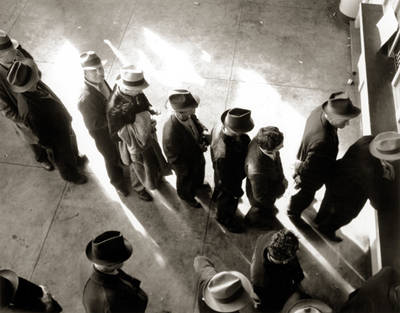
Unemployment:
Dark
Dusty
Sad / Dismal
Waiting
Desolate
Lines
Diagonal Shadows


In this image, there are men in suits and hats, possibly from the 1920s, waiting in two lines at a window counter. The image is shot in black and white, and the sun is shining at the 10 o'clock position. The floor is marble and there is a man standing towards the back of one line staring into the camera. The cameras position is at a 3/4ths top view above where the counter is located. Other than the man staring into the camera, it is impossible to see the other men's faces or expressions due to their hats. Also, none of the people in the picture are talking to one another and look to be solemnly waiting in line.

Thursday, September 15, 2011

2011 Porsche 911 GT3 (997)


Representational Level:
The 911 chassis from Porsche has every aspect of what the public sees as a sports car. It has a low and wide stance, and has many materials that are of high quality, giving off justification for its high price. The car has maintained a certain prestige in the automotive world as a competitor in both technological advancements as well as overall driveability. The viewer can automatically tell the car is a Porsche due to its shape and sound, as well as the way that it drives. The representational aspect of the design of the car influences both the abstract and symbolic forms of the Porsche. Not only does the representational form of the 911 chassis act as a symbolic representation of the company as a whole, but the fact that the car is so signature to Porsche almost forces abstraction to take place with every reiteration of the car.


Abstract Level:
As stated earlier, I believe that because the 911 is such a clear representation of Porsche, that the designers are always coming up with new ideas and utilizing abstraction as a form of art with every new reiteration of the car. If the viewer takes a glance at the car, they will notice that the shape is very abstract and different from any other cars on the road. The viewer will also notice the various vents and diffusers that are utilized for aerodynamic efficiency, but that also are not very common on road cars. The shape stimulates the notions of speed and handling, due to the overall stance of the 911 and the aggressive styling. The role of abstraction justifies the notion of the 911 being Porsche's flagship vehicle. The new ideas and inventive notions that come forth with every new 911 seem to solidify its place in automotive history.


Symbolic Level:
The shape of the Porsche 911 has not changed since its conception in the 1970s. Thus, the mere look of the car is symbolic of Porsche and its heritage. With every new model that comes out, Porsche always pushes the car as their visually symbolic representation of the company and its ingenuity with technology, skill, and craftsmanship. This symbolic representation that the 911 delivers impacts the viewer because although the car looks similar to other 911s, the viewer can tell the model year of the car based on little nuances that reflect that time era. The viewer knows that the car they are looking at is a symbol of Porsche's influence on the automotive world and that the car carries a prestige as a direct symbol of the manufacturer. This symbolism directly affects both representation and abstraction of the car. Because the car is such a symbol of Porsche's ideas and notions, both representation and abstraction with every new model are taken into great consideration because all three visual aspects of the Porsche 911 are developed to spoil the senses. This belief that Porsche may have developed the "best" road car in automotive history is a reflection upon the 911s incredible representational, abstract, and symbolic levels of visual design communication with customers and enthusiasts all over the world.